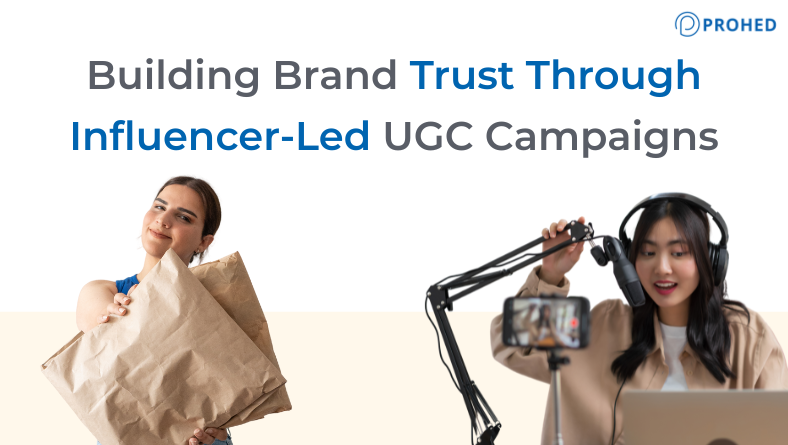
Influencer-led UGC campaigns build authentic brand trust through social proof, carrying a credibility weight that produced advertisements cannot manufacture. Consumers view recommendations from real people as honest evidence, which is why PROHED, a performance marketing agency in Gurgaon, structures these strategies as measurable, high-converting performance channels rather than just brand awareness plays.
What separates brands that build lasting trust from those running forgettable campaigns in 2026 isn’t budget, it’s authenticity at scale. At PROHED, a performance marketing agency, based in Gurgaon, we’ve consistently seen how influencer-led UGC marketing outperforms produced ad creative on metrics that really count: watch-through rate, purchase intent and cost per acquisition. Indian consumers are now more sophisticated than at any point in time. They have been advertised to throughout their lives and they realise what a scripted brand message is. What they pick up is a brand message that sounds more like a genuine recommendation from someone they already follow.
Influencer marketing done right doesn’t feel like marketing. That’s the entire point, and it’s why UGC marketing has moved from a brand awareness tactic to a genuine performance channel for D2C brands across beauty, health, fashion, and FMCG in India.
Why Influencer-Led UGC Campaigns Are the Currency of Brand Trust in 2026
In 2026, building trust with customers is more important, and more difficult, than ever before. The days when a business could simply run a glossy ad and woo potential consumers are over. Today’s savvy customers scroll faster and have almost built-in filters for anything that comes across as petulant.
So it is imperative to conduct influencer-led UGC campaigns. When an influencer is already trusted by their followers, they don’t need to have the brand ask their followers to place their trust in them. They just need to share their experience with a brand. And that’s an emotional instant connection.
That’s the power of user generated content for building consumer trust. The content forces the viewer to connect with a brand and not ignore it because people are adept at deactivating their brains when they see an ad. When a real person shares their real experience with a brand, they are not deactivating their brain. They are considering it as something like a recommendation from a friend. You cannot beat that when having your target customer open an app and see a digital marketing campaign right between those other apps.
In today’s world, where consumers are bombarded with ads, influencer-led UGC offers three things no brand-produced creative can replicate: real, relatable, and trustworthy content.
Top UGC Formats in Influencer-Led Campaigns
Social media is full of influencers who’ve built loyal followings by sharing content that feels genuinely theirs. The formats that consistently perform best for UGC content in Indian markets right now:
- Reels & Short-Form Videos: The highest-reach format in India in 2026. Short, engaging, shareable, and the algorithm rewards authentic over polished.
- Unboxings: Genuine unboxing reactions build product curiosity faster than any product page. The “what’s inside” moment is a powerful trust-builder.
- YouTube Videos: Long-form content for categories where the purchase decision is considered, skincare routines, supplement stacks, tech products. These drive purchase intent through depth, not reach.
- Instagram Stories and Polls: Ephemeral but high-engagement. Great for real-time product reactions and creating a sense of direct access.
- Tutorials and How-Tos: Shows the product working in real conditions. Particularly powerful for beauty, fitness, and home categories.
- Video Testimonials: Genuine before/after stories where the transformation is real. These build the deepest trust when the story is genuinely the influencer’s own.
- Livestreams: Real-time product showcasing with live audience interaction. Increasingly used for D2C product launches in India.
Brief influencers with direction, not scripts. Give them the product context, the key message, and the campaign objective, then let them translate it into their voice. That flexibility is what produces content that actually performs.
Creative Ways UGC Campaigns Attract Customers (That Paid Ads Can’t)
The reason influencer-led UGC works as a customer acquisition tool isn’t mysterious, it removes the psychological barrier that makes people ignore ads. These are the creative ways to attract customers that Indian D2C brands are using in 2026 that standard paid creative simply can’t replicate.
- Seeding over scripting: Instead of briefing influencers with a word-for-word script, brands like Mamaearth and The Whole Truth seed products to micro-influencers with one instruction: share your honest reaction. The resulting content is genuinely varied, genuinely human, and converts at a higher rate than any produced creative, because it reads as discovery, not promotion.
- Comment-to-content loops: D2C brands are mining their own comment sections and DMs for real customer language, then briefing influencers to address those exact concerns in their UGC. This closes the loop between customer objections and conversion-focused content, and signals to new customers that the brand is actually listening.
- Brand trust with customized links: Assign each influencer a unique tracking link or discount code. This turns UGCmarketing from a brand awareness play into a measurable performance channel, and gives clean data on which creator, format, and platform is actually driving purchases. This is what makes influencer campaigns defensible to a CFO: you can show exactly what each partnership cost and what it returned.
How Influencer-Led UGC Drives Customer Loyalty and Retention
Influencer-led UGC campaigns don’t just acquire customers, they build the kind of relationship that brings them back. When customers see influencers they trust using and genuinely enjoying a product, the emotional connection formed extends to the brand itself.
This is the longer-term play in influencer marketing: the first purchase might be driven by a promo code, but the second and third are driven by the trust the brand built through consistent, authentic content. Customers who discovered a brand through UGC tend to become its most vocal advocates, because they feel like they found it rather than being sold to.
UGC content also keeps working long after a campaign ends. A well-performing reel from six months ago is still driving views, saves, and profile visits. Unlike a Meta ad that stops the moment you stop paying, organic UGC compounds, which is why the best D2C brands treat their UGC library as a long-term asset, not a one-campaign resource.
Also Read: Top 7 Social Media Marketing Companies in Gurgaon (2026)
Success Stories: Brands That Built Trust Through UGC in 2026
The best examples of user generated content for building consumer trust in India aren’t the biggest budgets, they’re the clearest strategies.
- SUGAR Cosmetics: UGC campaigns built around makeup tutorials and real-use reviews by influencers. The focus on making beauty accessible and authentic, not aspirational and out-of-reach, is what built the community that drives repeat purchase.
- L’Oréal India: Makeup artists, skincare experts, and beauty influencers creating genuine UGC that demonstrates product performance rather than claiming it. Trust built through proof, not promise.
- MamaEarth: Influencers sharing honest experiences with natural, eco-friendly products. The authenticity of the content is inseparable from the brand’s positioning, and UGC is the format that makes that positioning credible at scale.
In 2026, the brands reaping the most from UGC campaigns approach it as a performance channel, not just a brand awareness platform. MamaEarth’s D2C model, boAt’s creator commerce approach and Wow Skin Science’s Amazon-first UGC strategy have one thing in common: UGC is measured by acquisition cost, not reach.
The PROHED Roadmap: Building Brand Trust Through Influencer UGC
Here’s the seven-step process we use with D2C brands looking to build a genuine UGC marketing engine, not just run a one-off campaign:
- Identify Your Brand’s Core Message: Clarify your brand’s values and mission before approaching any influencer. The brief is only as good as the clarity behind it.
- Choose the Right Influencers: Match by audience demographics and content style, not follower count. A 15,000-follower micro-influencer in your exact category converts better than a 2M-follower generalist.
- Set Clear but Flexible Guidelines: Product details and key messages are yours to define. How the influencer presents them is theirs. Respecting this boundary is what produces content that actually performs.
- Encourage Storytelling: Personal experiences convert better than product descriptions. Brief influencers to share their story with the product, not your marketing copy.
- Use Diverse Content Formats: Reels, YouTube, tutorials, stories, different formats reach different stages of the purchase journey. Build a content calendar that covers all of them, not just whatever’s trending.
- Engage and Respond Actively: Like, comment, and share UGC across your own channels. This signals to the influencer’s audience that the brand is real and present, and amplifies the content’s organic reach.
- Track and Measure with Customized Links: Every influencer gets a unique tracking link or promo code. This is non-negotiable if you want to treat influencer marketing as a performance channel rather than a branding exercise.
Conclusion
The brands that build lasting trust in 2026 aren’t running the biggest campaigns they’re running the most believable ones. Influencer-led UGC works because it removes the brand’s voice from the equation and replaces it with something consumers trust more: another consumer’s genuine experience. The importance of UGC for building consumer trust isn’t a marketing theory. It’s measurable in watch-through rates, comment rates, and purchase intent scores that consistently outperform brand-produced creative. The question is whether you’re treating it as a performance channel with proper tracking, or leaving that data on the table.
Frequently Asked Questions
1. What is influencer-led UGC marketing?
Influencer-led UGC refers to marketing campaigns that are based on creating and distributing user-generated content by product influencers. Influencer UGC content is very different from traditional branded content, since the creative is led by the influencer’s voice and point of view, which is the reason UGC is trusted much faster than produced advertising.
2. Why should you trust the influencer and give them creative license?
Because audiences can tell when an influencer is reading a script. The trust an influencer has built with their followers is entirely based on their authenticity, the moment their content starts sounding like a branded announcement, that trust erodes. Giving influencers creative license doesn’t mean giving up control. It means providing clear product context and campaign objectives, then stepping back to let them translate it into their voice. The brief defines the what — the influencer defines the how. Campaigns that respect this boundary consistently outperform those that don’t.
3. How does user-generated content build brand trust?
User generated content for building consumer trust works because it’s socially verified. When someone shares a genuine product experience, through a review, a reel, an unboxing, other consumers interpret it as honest evidence, not marketing. This is why UGC consistently outperforms produced ad creative on watch-through rate, comment rate, and purchase intent. It doesn’t just tell people to trust a brand. It shows them that other people already do.
4. What are creative ways to attract customers through UGC?
The three most effective creative ways to attract customers through UGC in India right now are: product seeding to micro-influencers with minimal scripting (letting genuine reactions lead the content), comment-to-content loops where influencer content directly addresses real customer questions from your community, and brand trust with customized links, assigning unique tracking URLs or discount codes to each creator so you can measure exactly what each partnership is driving in revenue.
5. How do you measure the ROI of influencer-led UGC campaigns?
Tracking starts with unique URLs or discount codes per influencer, this is the baseline. Beyond that, track cost per view, cost per click to your product page, and cost per acquisition from each creator’s traffic. Compare these against your blended CAC from paid channels. The best UGC content programmes in India in 2026 are reporting CAC figures competitive with or lower than Meta Ads, but only for brands that have set up proper tracking infrastructure from the start.
Are you ready to build a UGC strategy that drives revenue? PROHED partners with D2C beauty, health, fashion, and FMCG brands in building influencer marketing and paid creative testing frameworks that deliver brand trust and actual acquisition results.
Schedule a Free Strategy Call with PROHED Today