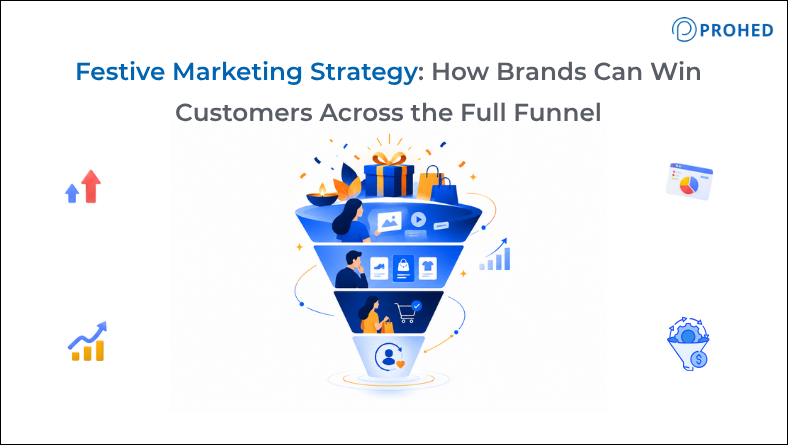
Festive marketing works best when a brand treats it as a customer journey, not a single sale event. It means matching the message to where the shopper actually is, first discovery, comparison, ready-to-buy, and post-purchase, rather than running one blanket ad for the whole season. PROHED, a performance marketing agency working with D2C brands across categories, builds these journey-mapped festive strategies well before the rush starts.
Most festive campaigns get the offer right and the sequencing wrong. A shopper who’s never heard of the brand sees the same ad as someone who bought last Diwali, and both get the same generic discount banner. That’s a messaging problem more than a targeting one, and it’s why so many campaigns keep converting the same warm audience without ever really expanding it.
Why Most Festive Campaigns Stop at the Discount
Budget planning gets a lot of attention every festive season, and rightly so. What gets skipped more often is the customer journey underneath the campaign, what a shopper needs to hear the first time they see the brand versus the tenth time. A single discount message tries to do the job of four different conversations at once, and usually does all four badly. This is where a real festive marketing strategy starts to look different from a generic sale calendar: it’s less about which channel gets which budget, and more about what the brand is actually saying at each point in the decision.
Mapping the Festive Customer Journey
Stage | Mindset | What Works | Format |
First discovery | Never heard of this brand | Introduce the value, not the price | Influencer seeding, PR, short-form video |
Comparison | Is this worth it against alternatives | Social proof and differentiation | Reviews, UGC, comparison content |
Ready to buy | I want this, make it easy | Urgency paired with a simple decision | Early-bird offers, bundles |
Post-purchase | Did I make the right call | Reassurance, then a reason to return | Order flows, loyalty invites, WhatsApp follow-ups |
The price only shows up meaningfully in stage three. Brands leading with the discount at every stage tend to attract deal-seekers who churn right after, not shoppers who stick around.
Personalizing the Funnel by Customer Type
Not every shopper needs the full journey. Segmenting festive messaging by who someone already is tends to matter more than most brands realize:
- New visitors need the full sequence, starting with awareness, since they have no context for the brand yet.
- Past customers can skip straight to the conversion stage, since trust is already built.
- Cart abandoners need a specific nudge, a reminder paired with a small incentive, not the same broad festive ad everyone else sees.
- Repeat or VIP buyers respond well to early access before the public sale goes live.
Common Messaging Mistakes During Festive Campaigns
A few patterns undercut an otherwise solid offer:
- Running identical ad copy across every funnel stage, regardless of whether the viewer already knows the brand.
- Treating new and returning customers as one audience instead of two messaging tracks.
- Going quiet after the festival ends, so post-purchase buyers get no reason to return.
- Using the same tone for influencer content and performance ad creative, which feels disjointed.
- Front-loading every message with the discount, which trains audiences to wait rather than engage.
Case Study: Restructuring the Funnel, Not Just the Spend
A D2C health and wellness brand came into a festive season with a familiar problem: strong product, crowded category, and an ad account running one message to everyone. Rather than pushing more budget into the same generic campaign, Prohed rebuilt the funnel so awareness content, retargeting, and post-purchase flows spoke to shoppers differently based on where they stood. Monthly sales grew 48%, largely by getting more out of existing traffic instead of simply buying more of it.
Explore Prohed’s client results to see how similar full-funnel approaches have played out for other D2C brands.
Where PROHED Fits Into This
PROHED builds festive strategies around this journey-first structure, pairing creative production, WhatsApp marketing, and paid media so the messaging shifts as a shopper moves through the funnel, not just the spend behind it. This applies across accounts where the brand already has decent traffic but hasn’t separated new-customer messaging from returning-customer messaging.
For brands weighing digital marketing agencies Gurgaon has to offer, this kind of funnel-first thinking is worth asking about directly, since most festive conversations stop at budget and never reach the customer journey underneath it.
Conclusion
A festive offer only goes as far as the message wrapped around it. Brands that map the journey, what a first-time visitor needs to hear versus a repeat customer, tend to convert more of their existing traffic without needing to spend more to reach it. The discount still closes the sale, but it’s rarely what earns the customer in the first place.
FAQs
1. What is a full-funnel festive marketing strategy?
It’s an approach that maps different messages to different stages of the shopper’s journey, awareness, comparison, conversion, and post-purchase, instead of running one generic festive ad to everyone. The goal is matching what’s said to where the shopper actually stands, not just when they see it.
2. How is festive marketing different for new versus returning customers?
New visitors typically need the full journey, starting with brand introduction, while returning customers can skip straight to an offer since trust is already established. Treating both groups the same usually means either boring repeat buyers or confusing first-time visitors.
3. What content works best for the awareness stage during festive season?
Short-form video, influencer seeding, and PR tend to work better here than direct offers, since the goal is introducing the brand’s value before asking for a purchase decision. Leading with a discount at this stage often gets ignored, since the shopper has no context for why it matters yet.
4. How can brands personalize festive messaging at scale?
Segmenting by customer history, new visitor, past buyer, cart abandoner, VIP, and building a distinct message for each tends to work better than trying to personalize every individual touchpoint manually. Most ad platforms and CRM tools can automate this segmentation once the messaging framework is defined.
5. Why do festive campaigns often lose momentum after the sale ends?
Because most brands stop communicating the moment the festival is over, treating the sale as the finish line instead of the start of a longer relationship. A short post-purchase sequence, even just a few messages, tends to keep buyers engaged until the next opportunity to sell.
6. Should festive messaging differ between paid ads and organic content?
Not entirely, but tone and format usually should. Paid ads tend to carry more direct offers, while organic and influencer content works better building trust and product familiarity earlier in the journey. Keeping both aligned in voice, even if the format differs, avoids a disjointed brand experience.
7. How long should a festive marketing campaign run?
Most effective festive campaigns run six to eight weeks total, factoring in awareness building before the peak and retention activity after it ends. A campaign that only spans the actual sale days misses most of the journey that leads a shopper to buy.
8. What’s the biggest mistake brands make with festive customer journeys?
Leading every single message with the discount, regardless of whether the shopper has ever heard of the brand before. It tends to attract deal-seekers who disappear once the sale ends, rather than shoppers who stick around because the brand actually earned their attention first.
Ready to Map Your Festive Customer Journey?
A festive campaign built around one generic message usually converts less of the traffic it already has. Talk to Prohed’s team about building a festive marketing strategy that actually speaks differently to shoppers at each stage of the funnel.
PROHED is a performance marketing agency and one of the digital marketing agencies Gurgaon D2C brands turn to each festive season, alongside its work as a social media marketing company in Gurgaon.
Schedule a Free Strategy Call with PROHED Today