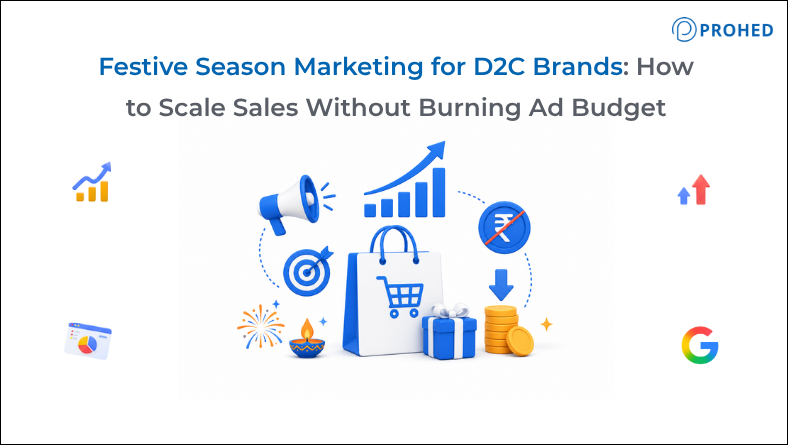
Every D2C brand wants a spike in festive sales. Fewer actually get it without paying through the nose for it. Ad inventory gets pricier, everyone in the category starts bidding on the same handful of keywords, and by the time the season actually peaks, a lot of brands look back and realize their margins quietly disappeared somewhere in between. Smart festive season marketing is what keeps that from happening. At PROHED, a performance marketing agency working with D2C brands across categories, this is the kind of planning work that tends to decide whether a festive season feels profitable or just exhausting.
What Is Festive Season Marketing?
At its core, festive season marketing is the set of campaigns, offers, and channel decisions a brand runs around occasions like Diwali, Dussehra, and the year-end sale window. The difference between doing this well and doing it badly usually comes down to timing. A solid festive marketing strategy gets creative, budgets, and timelines locked in well before the rush starts, so the brand isn’t stuck competing purely on bid price once costs are at their highest.
D2C brands feel this more than most. Paid channels are often their only real path to discovery, so a festive advertising strategy that starts too late can eat months of margin in a matter of weeks.
Why Festive Season Sales Need a Different Playbook
Consumer intent shifts fast during the festive window, but so does the competition. Nearly every brand in a category ramps spend at the same time, which pushes up auction costs across Meta, Google, and everywhere else people are advertising. Wait until the peak week to launch, and you’re often paying the highest rate of the year for a customer you could have picked up much more cheaply a few weeks earlier.
That’s really why festive ecommerce marketing needs its own separate timeline, distinct from whatever always-on campaigns are already running. Brands that move early get to build audience signals and lock in lower costs before things get crowded.
Typical Cost Behavior During Festive Season
|
Period |
Ad Costs |
What to Do |
|
Pre-festive (3-4 weeks before) |
Relatively stable |
Build audiences, test creative, warm up retargeting pools |
|
Early festive window |
Rising steadily |
Launch early-bird offers, push retargeting hard |
|
Peak festive days |
Highest of the year |
Rely on warmed audiences, avoid new cold campaigns |
|
Post-festive tail |
Dropping fast |
Clear inventory, retarget cart abandoners |
When Should Festive Marketing Campaigns Start?
Most D2C brands start too late and then wonder why acquisition costs feel unmanageable. As a rough rule, planning and creative production should kick off six to eight weeks before the main festive period. Audience warming and early-bird offers usually go live three to four weeks out, before the auctions get flooded.
Festive Season Strategies for D2C Brands
A handful of strategies tend to hold up well when it comes to scaling sales without letting spend spiral out of control:
- Launch early-bird or pre-festive offers so you’re capturing demand before prices peak.
- Build retargeting pools weeks in advance. Peak-season budget should go toward warm audiences, not cold ones.
- Bundle products to lift average order value, rather than leaning only on discounts.
- Lean on WhatsApp and email for existing customers. These channels don’t get more expensive just because it’s festive season.
- Rotate creative often. Festive audiences see a lot more ads than usual and fatigue quickly.
- Hold a floor on marketing efficiency ratio instead of chasing volume no matter the cost.
Related Read: How Indian D2C Brands Can Build a Profitable Social Commerce Funnel
Where Different Channels Fit During Festive Season
|
Channel |
Best Use |
|
Meta Ads |
Broad reach and retargeting warmed audiences |
|
Google Search |
Capturing high-intent, ready-to-buy searches |
|
WhatsApp Marketing |
Reaching existing customers without rising CPMs |
|
Influencer Collaborations |
Building trust ahead of the peak buying window |
|
Email Marketing |
Driving repeat purchases post-festival |
How to Scale Sales Without Burning Ad Budget
Scaling spend doesn’t have to mean scaling waste right along with it. A few guardrails help keep that in check:
- Set a hard MER floor before the season starts, and actually pause campaigns that fall below it.
- Keep new-customer acquisition budgets separate from retention budgets, so one doesn’t quietly eat into the other.
- Get aggressive with negative keywords during peak days. Junk traffic gets pricier too.
- Track cost per profitable order, not just cost per click, when you’re reviewing daily numbers.
- Hold back a contingency budget for the final 48 hours. Last-minute demand often needs a quick reshuffle.
Where PROHED Fits Into This
PROHED is a performance marketing agency and an established d2c marketing agency for growth-stage brands, and festive campaign calendars tend to follow the same structure here every year: audience warming first, spend scaling second, waste control the whole way through. That means paid media and performance marketing, SEO, WhatsApp marketing, social media management, and creative production all working together during the season, not as separate workstreams that only talk to each other once a week. PR and influencer outreach tend to get folded in too, since festive trust-building often starts well before the ad spend does.
For brands weighing digital marketing agencies Gurgaon has to offer, or looking for an ad agency in Gurgaon that actually understands D2C economics, festive season planning is a decent way to see how a team performs under pressure, not just how well they pitch.
Conclusion
Festive season marketing rewards the brands that plan early and quietly punishes the ones that wait for demand to peak before acting. The brands that come out ahead usually aren’t spending the most. They’re spending with more structure, warmed audiences, a protected budget floor, and creative that hasn’t gone stale by week two.
FAQs
1. How do you market a brand during the festive season?
It works best when campaigns start weeks before the peak, with early-bird offers and retargeting doing most of the heavy lifting before auction costs climb. Pairing paid media with owned channels like WhatsApp and email also takes some of the pressure off increasingly expensive ad platforms.
2. How can D2C brands increase festive sales?
Bundling, limited-time festive packaging, and leaning on retargeting over cold acquisition tend to move the needle without inflating cost per order. A solid post-purchase flow helps too, turning one-time festive buyers into repeat customers afterward.
3. When should festive marketing campaigns start?
Generally, six to eight weeks out for planning and creative, with audience warming and early offers going live three to four weeks before the season hits. Start any later and you’re mostly just competing at peak auction prices.
4. How much should brands spend on festive advertising?
There’s no single right number here, since it depends on margin, average order value, and how competitive the category is. A better approach is setting a marketing efficiency ratio floor and letting spend scale up to that limit, rather than fixing a budget in isolation.
5. What marketing channels work best during the festive season?
Meta and Google are strong for reach and catching high-intent shoppers, while WhatsApp and email stay reliable for existing customers without the rising costs. Influencer collaborations help too, especially for newer D2C brands still building trust before the peak window.
6. Should festive discounts be the main strategy for D2C brands?
Not really, since discounts alone chip away at margin fast once every competitor is running something similar. Bundling, limited editions, and loyalty perks tend to protect margin better while still giving people a reason to buy now rather than later.
7. How can brands avoid overspending during peak festive days?
Setting a hard cost or efficiency floor ahead of time, and checking performance daily instead of weekly, catches overspending before it snowballs. Retargeting pools built earlier in the season also cut down on how much expensive cold acquisition you need at peak.
8. Is festive marketing only relevant for large D2C brands?
Not at all, and smaller brands often gain more from planning early, since they can’t absorb inflated acquisition costs the way bigger, better-funded competitors can. A focused strategy built around retention and warmed audiences tends to work regardless of size.
Ready to Plan a Profitable Festive Season?
Waiting until the festive rush to start planning usually means paying peak prices for average results. PROHED is a performance marketing agency and ad agency in Gurgaon, recognized among digital marketing agencies Gurgaon businesses turn to, and works as a dedicated d2c marketing agency for growth-stage brands.
Schedule a Free Strategy Call with PROHED Today