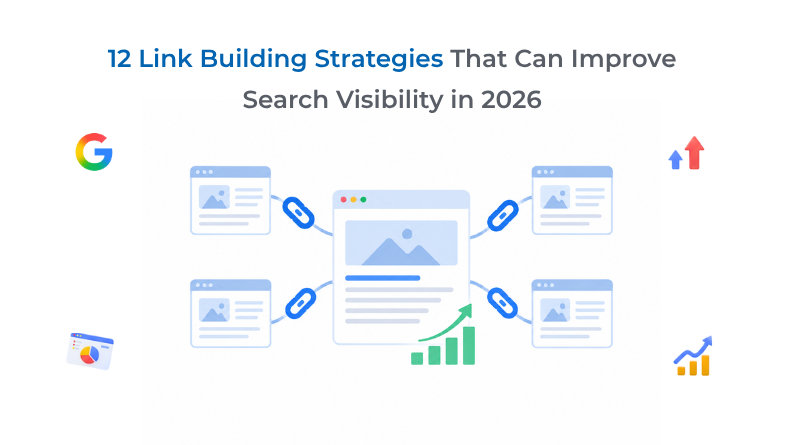
Ask most SEOs what they’re focused on these days and you’ll get content, technical fixes, maybe some AI search stuff. Link building barely comes up anymore, like it’s something people quietly stopped doing around 2019. That’s actually a mistake. Link building strategies remain one of the strongest ranking signals Google has, and brands skipping this side of SEO tend to plateau hard even when everything else on the page is genuinely solid. At PROHED, an SEO agency working across D2C, EdTech, and real estate clients, we treat link building as something you keep doing, not a project you wrap up and forget about. Here are 12 approaches that are actually pulling weight right now.
Why Link Building Strategies Still Matter for SEO in 2026
Google’s gotten smarter about plenty of things over the years, but backlinks haven’t stopped being a core trust signal. A link from a relevant, authoritative site is basically a vote of confidence, and the algorithm still weighs that heavily when it’s deciding where a page belongs.
What’s actually shifted isn’t whether links matter. It’s which ones do. The old volume-driven stuff, directory submissions, comment spam, link farms, doesn’t just fail to help anymore. It actively risks getting you penalised. White hat link building built around genuine relevance and real editorial value is what actually moves the needle now.
1. Digital PR and Newsworthy Content
Getting covered by journalists is still one of the highest-value link building techniques around, mostly because those links come with real domain authority attached, plus genuine editorial context that outreach-only links just don’t carry.
This works best when there’s something genuinely newsworthy behind it, original research, a data study, survey results nobody’s published before, rather than pitching your product straight up. Journalists link to whatever makes their story stronger. Not to brands asking for a favour.
If you want a sense of what this actually looks like in practice, it’s worth browsing our PROHED newsroom, where we cover client announcements and press coverage across industries. It’s a decent reference point for the kind of coverage genuinely newsworthy stories can earn, and the format that tends to get picked up.
2. Guest Posting on Sites That Actually Matter
Guest posting still works, but only when you’re selective about it. The shift here has been quality over volume, plain and simple. One well-placed post on a site your audience actually reads beats ten low-effort posts scattered across sites nobody opens.
Go after publications your target audience genuinely follows, not just whatever site has a decent domain rating and low standards for what gets published.
3. Building Things People Actually Want to Link To
A linkable asset is content built specifically to attract links on its own, original data, a genuinely comprehensive guide, a free tool, an interactive calculator. Instead of chasing links one by one, you build something valuable enough that other sites want to point to it without you asking.
It’s a slower play upfront, sure. But it compounds. One solid asset can keep pulling in backlinks for years with basically zero additional outreach.
4. Broken Link Building
This one’s pretty simple. Find broken links on relevant sites, then suggest your own content as the replacement. It’s a genuine favour to the site owner too, since a broken link hurts their user experience just as much as it bugs you, which is exactly why this tends to get better response rates than most outreach.
Tools like Ahrefs or Screaming Frog can surface broken links on target sites fairly quickly, so this scales better than it sounds at first.
5. The Skyscraper Technique
Find a piece of content that’s already racked up a bunch of backlinks, then build something genuinely better, fresher data, cleaner formatting, deeper coverage, and reach out to the sites linking to the original asking them to consider yours instead.
The reason this works is you’re not creating link-worthy content from scratch and hoping someone stumbles on it. You’re going after demand that’s already proven to exist.
6. Resource Page Link Building
A lot of websites keep curated resource pages, basically lists of useful links on a given topic. Landing a spot on a relevant one is a genuinely durable win, since these pages tend to sit around for years, pulling in steady organic traffic the whole time.
Search “resources” plus your topic, or “useful links” plus your industry, and you’ll usually find a handful of pages worth pitching.
7. HARO and Journalist Request Platforms
Platforms that connect journalists with expert sources are a solid backlink strategy for landing links from genuinely high-authority publications. The trick is responding fast and specifically, with an actual quotable insight rather than generic filler commentary, since that’s what actually gets picked up over the dozen other pitches a journalist’s sitting on.
8. Look at Where Your Competitors Are Getting Links
Check where competitors are earning backlinks and you’ll usually spot gaps worth filling, or opportunities you just hadn’t thought to pursue. If a site’s linked out to three of your competitors already, there’s a decent chance they’d consider you too, especially if your content offers something the others don’t.
This isn’t really about copying competitors move for move. It’s more about figuring out which sites in your space are actually open to linking out in the first place.
9. Local Citations and Business Directories
For local and regional businesses specifically, getting listed accurately across relevant directories still contributes meaningfully to local search visibility. This matters less for raw link equity and more for local SEO signals overall, but it’s worth doing properly rather than skipping it because it feels old-fashioned.
10. Building Real Relationships With Industry Partners
Links that come out of genuine business relationships, suppliers, partners, clients willing to give you a mention, tend to be some of the most natural, sustainable links a brand can end up with. It’s not a scalable tactic the way outreach is, honestly. But it’s worth actively nurturing as part of the bigger picture.
11. Reclaiming Mentions That Aren’t Linked Yet
Sometimes a site mentions your brand by name without actually linking to your site. Finding those unlinked mentions and asking for the link is one of the easiest wins in this whole list, since the site’s already shown they’re willing to talk about you. You’re just asking for the link that should’ve been there in the first place.
12. Podcast Guesting and Interview Links
Showing up as a guest on relevant industry podcasts usually comes with a link back from the show notes page. Beyond the SEO value, it puts you in front of a real audience and builds credibility in your category, a nice example of a tactic that pays off in more ways than just the link.
Link Building Techniques: Effort vs Impact Comparison
| Strategy | Effort Required | Typical Link Quality |
|---|---|---|
| Digital PR | High | Very high |
| Guest posting | Medium | High, if selective |
| Linkable assets | High upfront, low ongoing | Very high, compounds over time |
| Broken link building | Medium | Medium to high |
| Skyscraper technique | Medium to high | High |
| Resource page outreach | Low to medium | Medium |
| HARO/journalist requests | Low per response | High |
| Competitor analysis | Low research, varies on execution | Varies |
| Local citations | Low | Low to medium locally |
| Partner relationships | Ongoing, low per link | High, very durable |
| Unlinked mention reclamation | Low | Medium to high |
| Podcast guesting | Medium | Medium to high |
How PROHED’s SEO Strategies Approach Link Building
We treat link building as something ongoing, not a quarter-long campaign that wraps up and gets shelved. In practice that usually means mixing a handful of these approaches depending on the client’s industry, digital PR tends to work brilliantly for consumer brands with a real story to tell, while resource page outreach and broken link building do more heavy lifting for B2B and service-based clients.
Motozite, a luxury car aggregator we worked with, is a decent example of what consistent SEO and link-focused work can actually do. Their organic traffic doubled in four months, and that came from technical SEO and backlink work running together, not either one carrying the whole thing alone. Our work with Khoya Mithai followed a similar pattern, SEO fundamentals paired with link-building effort drove 115% higher organic traffic and meaningfully better search rankings within six months.
As a digital marketing agency offering SEO alongside performance marketing, social media marketing, and CRO, we’ve found link building just works better when it’s coordinated with content strategy instead of run off in its own silo.
Conclusion
Link building hasn’t gone out of fashion, it’s just gotten pickier. The brands still winning at this in 2026 are the ones going for fewer, better links instead of volume, building real relationships and genuinely useful assets rather than chasing quick wins that carry real penalty risk. Pick two or three strategies from this list that actually fit your industry and your bandwidth, rather than trying to run all twelve at once, and just stay consistent with whichever ones you pick.
FAQs
1. What is the most effective link building strategy?
Digital PR and genuinely linkable assets tend to produce the highest-quality, longest-lasting links, since they earn backlinks on real value rather than a direct ask. That said, it really depends on your industry, a B2B service business often gets more out of resource page outreach and partner relationships than chasing press coverage.
2. How do you build high-quality backlinks?
Focus on relevance and authority over sheer count, a handful of links from sites your actual audience trusts does more for rankings than dozens of weak ones ever will. Pair genuinely link-worthy content with active outreach, since even great content rarely earns links entirely on its own.
3. What are the different types of link building?
Broadly, you’ve got earned links (PR, linkable assets, genuine mentions), built links (guest posts, broken link fixes, resource page outreach), and relationship-based links (partnerships, citations). Most solid strategies end up combining a few of these rather than leaning on just one.
4. How many backlinks should a website build?
There’s no magic number here, quality and relevance matter far more than count relative to what your competitors have. A better move is checking what your top-ranking competitors’ link profiles actually look like and closing that gap with comparable or stronger links, instead of chasing some arbitrary total.
5. Is link building still important for SEO in 2026?
Yes, backlinks are still one of Google’s core ranking signals, and sites with genuinely strong, relevant link profiles keep outperforming ones without, even when on-page SEO is otherwise solid. What’s changed is that quality now matters way more than volume, so the old spray-and-pray tactics can actively hurt more than help.
6. Can too many backlinks hurt a website’s SEO?
Not backlinks themselves, but a pattern of low-quality, spammy, or obviously manipulative links can trigger a penalty. Worth auditing your link profile now and then and disavowing anything genuinely toxic, rather than assuming every backlink is automatically a good thing to have.
7. How long does it take for link building to impact rankings?
Most brands start seeing real movement within three to six months of consistent effort, though it varies a lot by competition and where your domain authority starts. Link building compounds over time, so what you see in month one is rarely a fair preview of what month six or twelve looks like.
8. Should small businesses bother with link building?
Yes, though the tactics that make sense look different from what a big enterprise brand would run. Local citations, resource page outreach, and genuine partner relationships tend to be more realistic and cost-effective starting points than large-scale digital PR for a smaller business.
Want a link building strategy actually built around your industry and competitors? Talk to PROHED, an SEO agency that pairs technical SEO with real outreach to move rankings, not just report on them.
Schedule a Free Strategy Call with PROHED Today