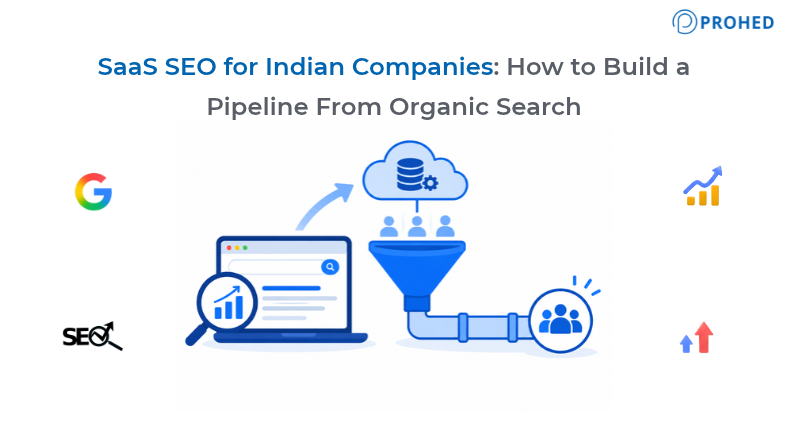
SaaS SEO means getting your software to rank for the searches people run when they’re close to buying, then turning those visits into demo requests, trials and paid accounts. For Indian SaaS companies, that usually starts with comparison, alternatives and integration pages, with topic clusters built around them. At PROHED, we care about one number more than any other: pipeline.
Here’s a scene most SaaS marketers will recognise. A startup in Bengaluru (or Gurgaon, take your pick) publishes two blog posts a week for a year. Traffic climbs. Everyone’s pleased. Then someone from sales asks how many demos came out of it, and the honest answer is a handful.
To be clear, that’s a made-up example. A familiar one, though. The posts weren’t bad. They were answering the wrong questions.
Why Most B2B SaaS SEO Strategy Fails to Produce Demos?
Top-of-funnel is tempting. Type “what is payroll” into any keyword tool and the volume looks lovely. But who’s searching? Students, mostly. Job seekers. People writing their own blog posts.
Now try “Keka vs Zoho People” or “payroll software with Tally integration.” Far fewer searches, sure. But the person typing each one has a budget and a shortlist, and quite possibly a meeting next week.
So a B2B SaaS SEO strategy that works runs backwards from how most teams plan it. Start with those narrow, high-intent searches. Build supporting content around them once they rank. Leave the broad awareness topics for last. It feels slow, because the traffic graph sits flat for a few months, but the demo graph tells a different story.
Which Pages Drive Pipeline for SaaS Companies?
These are the BOFU keywords and page types that tend to bring in demo requests. Build them first.
Page type | Example search | Why it converts |
Comparison pages | “Freshdesk vs Zoho Desk” | The buyer is choosing between two tools right now |
Alternatives pages | “Zoho CRM alternatives for startups” | They’re unhappy with a current tool and ready to switch |
Integration pages | “CRM with WhatsApp integration” | They need something specific that you either do or don’t |
Use-case pages | “Inventory software for D2C brands” | The query matches their exact situation |
Pricing pages | “GST billing software price” | They’re already budgeting |
Comparison pages deserve extra care. Say where the competitor is better. It sounds like commercial suicide, but buyers can smell a rigged comparison from a mile off, and they’ll close the tab. Show the product too: screenshots, a short screen recording, the real setup steps. And don’t leave the demo button in the header alone. Put one near the spot where the reader is making up their mind, say right after the feature table.
Product-Led Content: Write Like Someone Who Uses the Software
Product-led content teaches a task with your product as the tool. So skip “10 tips for better invoicing” and write “How to send GST-compliant invoices to US clients in five minutes,” with screenshots from your own dashboard.
Why bother? Because it ranks for practical searches and doesn’t read like a pitch. The reader gets something useful and watches your product do the job at the same time. It’s also where SaaS content marketing and SEO stop being two separate jobs. Every good guide should point somewhere: a template, a free trial, a demo.
Topic Clusters and Programmatic Pages
Once the BOFU pages are live, build clusters around them. One pillar page covers the big subject, while ten to twenty cluster pages dig into the smaller questions and link back to it. We’ve explained the whole model in our guide to topical authority in SEO.
Programmatic pages are the next lever if your product has lots of integrations, locations or use cases. Connect with 60 tools and you can generate 60 integration pages from one template. Each needs real detail, though. Pages where only the tool name changes tend to get ignored, and sometimes they drag the rest of the site down with them. Give every page something it can call its own: setup steps, limits, a use case, a screenshot.
India-Specific Things Most SaaS Teams Miss
Selling in India and abroad at once changes the plan, and plenty of teams don’t adjust for it.
Start with keywords. A US buyer searches “payroll software.” An Indian buyer tacks on “with PF and ESI” or “GST.” Same product, different query. Pricing works the same way. Keep separate INR and USD pages and set hreflang properly, or the wrong page will turn up in the wrong country.
Local integrations deserve their own pages too. Searches that mention Tally, Razorpay, Zoho or WhatsApp are often small, but in India the people typing them are very close to a decision.
And then there’s rendering. If your marketing site is JavaScript-heavy and built on an app framework, content can get delayed or hidden from crawlers when rendering isn’t set up right. Fix that before you write anything else. It’s more common than it should be, and it makes a decent screening question for partners, whether you’re hiring a freelancer or the best technical SEO agency India-wide. Ask them to show how Google actually renders your pages before they pitch you anything.
How Long Does SaaS SEO Take to Generate Demos?
On a new or young domain, count on three to six months before BOFU pages bring in steady demo requests, and nine to twelve before broader topics rank. Established domains get there sooner.
Months | What happens |
1–2 | Technical fixes, keyword research, first BOFU pages live |
3–6 | Comparison and integration pages start ranking, first organic demos |
6–12 | Clusters fill out, demo volume grows, CAC from organic drops |
12+ | Organic becomes a reliable pipeline channel |
It’s slower than ads, and there’s no way around that. What you get back is a page that keeps sending demos long after a campaign would’ve been switched off.
How Do You Measure SaaS SEO Success?
Ignore raw traffic. It’s the least useful number on the dashboard. For SaaS lead generation SEO, look at organic demo requests and trial sign-ups by landing page, SQLs and pipeline value from your CRM, rankings for BOFU keywords (not total keywords), and organic-sourced revenue with its payback period. Add a “How did you hear about us?” box to the demo form as well. People’s own answers catch things attribution tools miss.
Then pass UTM parameters and GA4 source data into your CRM, whether that’s HubSpot, Zoho or Salesforce, so each organic demo carries its source with it. SEO marketing tools like Ahrefs and Semrush are good at rankings. On their own, none of them can tell you about pipeline. Your CRM can.
How PROHED Approaches SaaS SEO?
We start from the sales conversation, not the keyword tool. Before a single page gets written, we go through your sales calls or CRM notes: which competitors keep coming up, which integrations buyers ask about, which objections stall deals. Those become the first pages.
A lot of founders shopping for an SEO company for startups, India-based or abroad, get handed a blog calendar first. We’d rather show you the five pages that could book demos next quarter.
Our search engine optimisation services in Gurgaon cover technical fixes, content and links. Because we also run Google Ads and Meta for SaaS teams, paid and organic work from the same keyword and demo data. For FitBudd, a personal training software company, our Facebook and Google campaigns cut cost per demo by 67% and raised marketing-qualified leads by 30% in the first six months. That was paid media, not SEO, though the goal is identical: more demos for less money. On the organic side, our work for A Box of Stories, a subscription brand, put 20+ keywords on page one and grew organic traffic 20% month on month.
If you’re testing paid social as well, our guide on Facebook ads for SaaS and B2B pairs well with this one. Still on the basics? Start with the complete SEO guide for Indian brands.
Conclusion
Organic search that builds pipeline starts small and specific. Rank for the searches buyers make just before a demo, widen out with clusters and product-led content, and count demos and revenue rather than visits. It takes a few months to show up. After that, it keeps working while you sleep.
FAQs
1. What is SaaS SEO?
It’s search engine optimisation for software companies. You aim for high-intent searches and turn that traffic into demos, trials and paying customers.
2. How long does SaaS SEO take to generate demos?
Three to six months for bottom-of-funnel pages on a newer domain, and nine to twelve for broader topics. Older domains with some authority already tend to move faster.
3. Which pages drive pipeline for SaaS companies?
Comparison, alternatives, integration, use-case and pricing pages. Each one matches a search from someone who’s already choosing a tool.
4. How is SaaS SEO different from ecommerce SEO?
Ecommerce SEO chases product and category searches that end in an instant purchase. SaaS sales cycles run longer, so the work goes into research and comparison searches that lead to a demo request.
5. How do you measure SaaS SEO success?
Track organic demo requests, trial sign-ups, SQLs, pipeline value and revenue in your CRM. Rankings and traffic only matter when they lead to those.
6. Should a SaaS startup start with blog content or BOFU pages?
BOFU pages. They bring fewer visitors, but those visitors are far more likely to book a demo, and that proves SEO’s value early.
7. Are programmatic pages safe for software websites?
They are, provided each page carries unique, useful detail. Pages that only swap in a keyword or tool name rarely rank and can hurt the wider site.
8. Do Indian SaaS companies need separate pages for India and global buyers?
Often, yes. Search terms, pricing and integrations differ between the two, so separate pages with correct hreflang help the right version appear in each market.
Want organic search to bring in demos, not just traffic? Talk to PROHED. Our SEO services in Gurgaon help SaaS teams turn search engine optimisation into pipeline.
Schedule a Free Strategy Call with PROHED Today