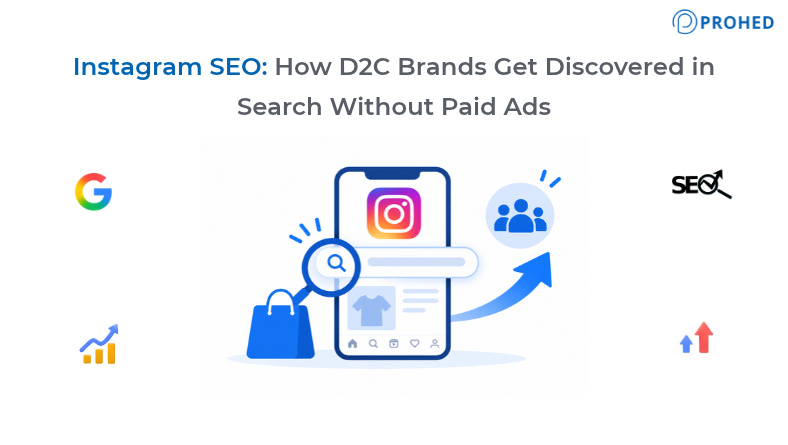
Instagram SEO is the practice of making your profile, posts and Reels show up when people search for products on Instagram, and now on Google as well. It rests on a few basics: clear keywords in your profile name field, bio and captions, descriptive alt text, and content that matches what shoppers actually type. At PROHED, we treat Instagram SEO as one of the most cost-effective discovery channels a D2C brand has, because a post that ranks keeps bringing in new eyes long after it goes live, with no ad spend behind it.
Someone types “vegan lipstick for dusky skin” into Instagram search. A few creators come up, then two or three brands. If your brand sells exactly that shade and still doesn’t appear, Instagram most likely can’t tell what your content is about.
How Instagram Search Works?
Instagram has been fairly open about how search ranks results. Three signals matter most:
- The text someone types, matched against usernames, profile names, bios, captions, hashtags and locations
- Their own activity, such as accounts they follow and posts they have engaged with
- Popularity signals, including clicks, likes, shares and follows on a result
You can’t control the second. The first is where Instagram search optimization starts.
Hashtags matter less than they used to. Instagram capped posts at five hashtags in December 2025, and Head of Instagram Adam Mosseri has called the more-hashtags-more-reach idea a myth. Plain-language Instagram keywords now carry more of the load.
Instagram Google Indexing: Your Posts Can Rank on Google Too
Since July 10, 2025, public photos, videos and Reels from professional accounts (business or creator, aged 18+) can be indexed by search engines such as Google and Bing, including posts going back to 2020. Account holders can switch this off in their settings, so check that yours is still on.
So a Reel captioned “how to style a cotton saree for office” can now surface on Google too. That’s Search Everywhere in practice, and our search everywhere optimization guide covers the wider picture across YouTube, Amazon and AI tools.
How to Optimize Your Profile for Instagram Discovery?
Start with your profile, since search matches your username, name and bio directly.
Profile element | What to do | Example |
|---|---|---|
Username | Brand name, easy to spell and search | @brandname |
Profile name field | Brand name plus what you sell | Brand Name, Ayurvedic Skincare |
Bio | Product category, city if relevant, one search phrase | Handmade leather bags from Jaipur |
Highlights | Named by what shoppers look for | Bestsellers, Size Guide, Reviews |
The profile name field is the one most D2C brands waste. It’s searchable and separate from your username, so a category phrase there can rank even when the handle is just the brand. Instagram allows only two changes in 14 days, so settle the wording first.
Captions, Alt Text and On-Screen Text
Once the profile is sorted, each post needs to say clearly what it’s about.
- Lead with the search phrase: Put the main keyword in the first line, before the “more” cut-off. “Cold-pressed hair oil for frizzy hair” tells Instagram far more than “Your new self-care ritual.”
- Write custom alt text: Instagram generates alt text automatically, but you can write your own under Advanced settings. Describe the product plainly, for example “olive green linen co-ord set, front view on a model.”
- Use on-screen text and speak the keyword in Reels: Instagram increasingly reads visual and audio cues, not just captions.
- Keep hashtags to a few relevant ones: Three to five specific tags beat a block of generic ones.
Creator Collabs and Engagement
Search popularity grows when the right people interact with your account. Creator collabs are one of the quickest ways to make that happen. A Collab post appears on both profiles and pools the engagement, so your product reaches the creator’s audience under your own handle.
Choose creators whose captions already use the terms your buyers search, not just those with the biggest following. Saves, shares and profile visits from a relevant audience do more for discovery than likes from a broad one. Once they find you, our social commerce funnel guide shows how to turn that attention into orders.
Can Instagram SEO Replace Paid Ads?
Not entirely, and it helps to be clear about the trade-off.
Instagram SEO | Paid ads | |
|---|---|---|
Cost per view | No media cost | Rises with competition |
Speed | Builds over weeks and months | Starts within hours |
Lifespan | Posts keep ranking | Stops when spend stops |
Control over reach | Limited | High |
The best mix for most D2C brands: organic search for evergreen, high-intent topics, paid ads for launches and tests.
How PROHED Approaches Instagram SEO
As a social media marketing company in Gurgaon, we start with search data rather than a content calendar. Our team pulls the phrases buyers use on Google, Instagram and YouTube (the YouTube side is covered in our YouTube SEO guide), then audits your profile name field, bio, captions and alt text against them.
Our SEO Services in Gurgaon team works alongside, so your website and Instagram target the same terms. Brands looking for the best digital marketing agency for D2C brands often come to us for ads first; stronger organic search content usually lowers how much they need to spend.
Conclusion
Instagram is now a search engine in its own right, and Google indexes much of what professional accounts post there. Name your profile clearly, write captions the way buyers search, add proper alt text and work with relevant creators, and you’ll get found more often without paying for every view.
FAQs
1. What is Instagram SEO?
It’s the work of optimizing your profile, captions and alt text so your account and posts appear in Instagram search, and in Google for public professional accounts.
2. Do keywords in Instagram captions help reach?
Yes, for search, because they help Instagram match your post to what people type, though they won’t make a weak post go viral.
3. Does Google index Instagram posts?
Yes. Since July 10, 2025, public posts and Reels from professional accounts (18+) can appear in Google and Bing, unless the account opts out.
4. How do you optimize an Instagram profile for search?
Use a clear username, add your main product category to the profile name field, write a bio with one search phrase, and name your Highlights after what shoppers look for.
5. Can Instagram SEO replace paid ads for discovery?
Not fully. It brings steady, low-cost discovery over time, while paid ads give speed and control, so most D2C brands need both.
6. How many hashtags should a D2C brand use on Instagram?
Up to five, which is Instagram’s limit. Specific, relevant tags work better than broad ones.
7. Does alt text on Instagram matter for search?
Custom alt text helps. It makes images accessible and gives search engines a clearer description of each product.
8. Do creator collabs help Instagram discovery?
They do. Collab posts appear on both accounts and share engagement, putting your brand in front of a relevant audience.
Want your products to show up when shoppers search on Instagram? Talk to PROHED about an Instagram SEO audit for your D2C brand. Get a Free Instagram SEO Audit.
Schedule a Free Strategy Call with PROHED Today