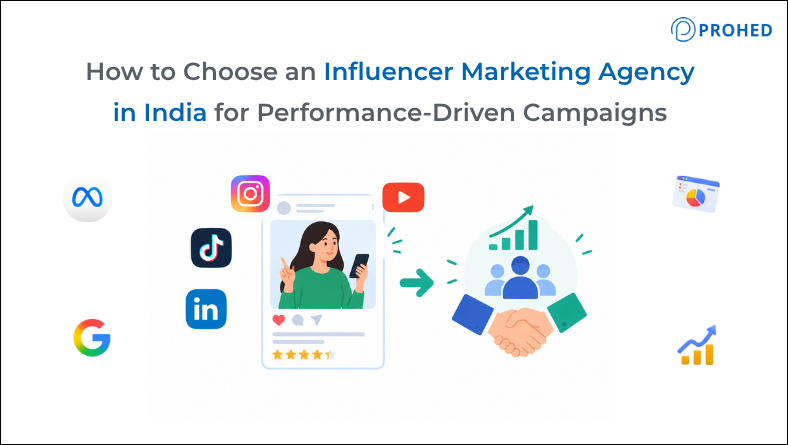
An influencer marketing agency in India finds creators, runs campaigns with them, and ties that work back to real results, like sales or app installs. Not just likes. PROHED works on this for brands in D2C and beauty. Picking the right agency comes down to one thing: can they turn a creator’s post into actual revenue?
Finding influencers is easy. Instagram makes sure of that. The hard part is finding an agency that treats influencer marketing like a real growth channel. Not just a brand awareness stunt. That’s the difference between a campaign that works and one that just racks up views nobody can use.
India has thousands of agencies claiming influencer expertise now. Most of them run the same playbook. Find a creator, send a product, post a reel, move on. Few actually connect that spend to a number a founder cares about.
Why the Right Agency Matters
Too many campaigns in India still get judged by follower count. That’s the wrong scoreboard. A creator with 50k real fans can beat one with a million random followers. A good agency knows this before they even sign the deal.
A solid influencer marketing agency India brands can trust does three things. It picks creators by audience fit, not vanity numbers. It sets deliverables tied to a funnel stage. And it tracks results like a paid ads team would. Skip any one of these, and you’ve got a one-time spend, not a real channel.
There’s a cost to getting this wrong too. Budget gets burned on creators who don’t match the brand. Content sits unused because nobody briefed it properly. And by the time results come in, or don’t, there’s no clean way to know what actually drove them.
Performance-Driven vs Traditional: What’s the Difference?
Not every agency runs campaigns the same way. Here’s the split.
Traditional Approach | Performance-Driven Approach |
Picks influencers by follower count | Picks influencers by fit and past conversion data |
Wins are views and likes | Wins are clicks, sales, installs, leads |
One campaign, no testing | Tests multiple creators, keeps what works |
Loose, creator-led brief | Brief built around a specific goal |
Tracking is a screenshot | Tracking is UTM links, promo codes, real data |
A good creator marketing agency treats every post like an ad set. Test it. Measure it. Cut it if it flops. Keep what works, and put more budget behind it the next month.
What to Check Before You Hire
A few questions matter more than any pitch deck.
- Do they have real case studies? Not just a list of creators they “have access to.”
- Can they explain how they vet influencers? Fake followers are still everywhere. A good agency checks this first.
- Do they mix flat fees with performance deals? Pure flat-fee pricing means their incentives don’t match yours.
- How do they report results? Screenshots are a red flag. Ask for real attribution data.
- Do they get your category? A skincare brand and a fintech app need very different influencer marketing campaign strategies.
- Who’s actually managing the account? A senior pitch team and a junior execution team are two different experiences. Ask who you’ll work with day to day.
Types of Creators, and When to Use Them
You don’t always need a celebrity. Most brands shouldn’t start there.
Creator Tier | Followers | Best For |
Nano | 1K–10K | Local trust, cheap testing, real content |
Micro | 10K–100K | Strong engagement, niche fit |
Macro | 100K–1M | Wider reach, decent engagement |
Celebrity | 1M+ | Big launches, brand buzz |
A smart influencer marketing agency in India rarely puts the whole budget on one tier. Most mix nano and micro for conversions. Then add a macro or celebrity push for reach, once the smaller-tier content is already proving what messaging works.
How to Measure If It’s Actually Working
Vanity metrics are easy to report and easy to hide behind. Real measurement takes a bit more setup, but it’s worth it.
- UTM-tagged links for every creator, so traffic is traceable back to the exact post
- Unique promo codes per influencer, which double up as a discount and a tracking tool
- Post-campaign surveys asking new customers where they heard about the brand
- Incremental lift testing, comparing sales in markets with and without the campaign running
None of these need to be complicated. Even two or three of them, used consistently, give a much clearer picture than follower counts ever will.
Red Flags to Watch For
Some warning signs show up fast, if you know where to look.
- A promise of “guaranteed virality.” Nobody can promise that.
- No talk of tracking before you sign anything.
- Pressure to commit to a big creator list before any testing.
- They won’t share past results, even in a blurred-out form.
- Pricing based only on follower count. Nothing about engagement.
Agencies that skip these traps run tighter campaigns. You’ll usually see it in the numbers within a month.
How PROHED Approaches Influencer Marketing
Influencer work is stronger when it sits inside a full performance strategy. Not off on its own. As a performance marketing agency, PROHED runs influencer campaigns next to paid media. Creator content gets tested and scaled the same way an ad would. It’s a big reason brands working with digital marketing agencies in Gurgaon see influencer spend act like a growth channel. Not a one-time brand push.
A Real Campaign: AKIVA
Take AKIVA, a health and wellness brand. The market was crowded, noisy, hard to actually cut through and reach the right people. PROHED went at it from a few angles at once, conquest campaigns, ads running across channels, social content, and influencer marketing thrown into the mix too. Not just one lever. Monthly sales ended up growing 48%. And influencer marketing was just one piece of that, not the whole story.
Point is, a creator alone doesn’t do much. They get someone to stop scrolling for a second. What happens after, the retargeting, the funnel, the testing, that’s what actually turns a scroll-stop into a sale.
Before You Sign Anyone
Start small. Run a short test with two or three creators first. You’ll learn more from that than any pitch deck. Watch how fast they report back. Watch if they push back on ideas that won’t work.
Influencer marketing in India moves fast. New platforms. New formats. New creator tiers gaining ground each year. Pick an agency that shifts with it, not one running the same playbook every quarter.
Conclusion
Look, picking an agency isn’t about who’s got the biggest list of creators. It comes down to this: can they turn a post into a sale, a lead, an install, something you can actually point to. The good ones test small before they scale up. They track things properly. And they don’t treat influencer marketing like some separate brand exercise sitting off to the side. Start small. Watch how fast they report back. Let the numbers decide if it’s worth scaling from there.
FAQs
1. What does an influencer marketing agency actually do?
It finds creators, negotiates deals, briefs the content, and tracks what happens after. A good one ties all of that back to real numbers, like sales, not just likes on a post. That’s really the whole job, start to finish.
2. How do I know if an agency is actually performance-driven?
Just ask how they measure success. If it’s reach or followers, that’s an old-school agency. A performance one talks about sales, tracking links, and promo codes right from the start, before you’ve even signed anything.
3. Is nano or micro influencer marketing worth it for small brands?
Often, yes, more than a celebrity push. These creators bring stronger engagement and cost less. That makes it easier to test what works before you spend big on a wider rollout, once you know what messaging actually lands.
4. How much does influencer marketing cost in India?
It swings a lot. Nano creators might work for a few thousand rupees, or just product. Celebrity deals run into lakhs. A good agency mixes tiers based on your budget, not trends, and adjusts as results come in.
5. Can you track influencer marketing like paid ads?
Yes, if it’s set up right. UTM links and promo codes show exactly which creator drove which sale. It works a lot like how a performance marketing agency tracks a Meta ad, just with a creator instead of an ad creative.
6. What’s the difference between influencer and creator marketing agencies?
Mostly just naming. “Creator marketing agency” sometimes signals a wider focus on content, not just endorsements. But in practice, the day-to-day work looks pretty much the same, sourcing creators, briefing them, and tracking what happens next.
7. How fast do influencer campaigns show results?
Views and engagement show up within days. Sales usually take a few weeks, especially if the campaign is backed by retargeting ads that push the same content again to people who already saw it once.
8. Should influencer marketing run with paid ads, or on its own?
With paid ads, almost always. Creator content works better when it’s retargeted afterward. That’s why PROHED plans influencer and performance marketing together, not as two separate things sitting in different corners of a marketing plan.
Schedule a Free Strategy Call with PROHED Today