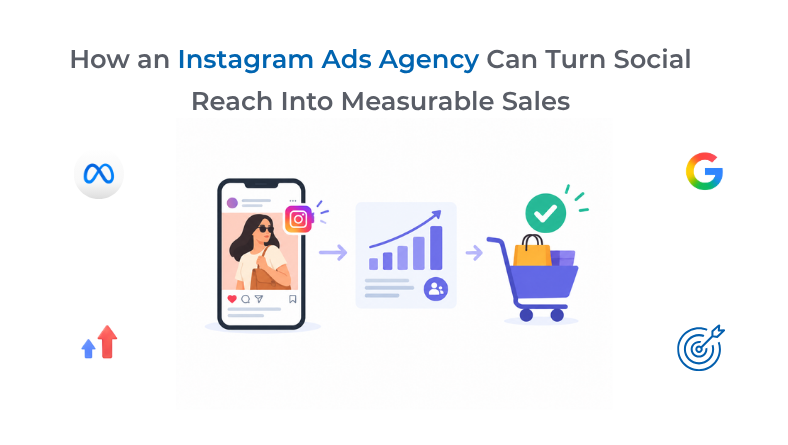
A brand with 100K followers and flat monthly revenue isn’t some rare edge case. It’s actually pretty normal for accounts running ads without a real strategy behind the spend. An Instagram ads agency exists specifically to fix that, turning scroll-stopping creative and sharp targeting into tracked, measurable sales instead of just reach numbers that look nice on a screenshot. At PROHED, a performance marketing agency in India running Instagram campaigns across D2C, beauty, and wellness brands, we’ve seen firsthand what a properly structured campaign does compared to one that’s just boosting posts and hoping for the best. Here’s what that difference actually looks like in practice.
What Does an Instagram Ads Agency Actually Do?
People assume this job is mostly picking pretty creative and setting a budget. Honestly, that’s maybe a fifth of it. The real work sits in structure, targeting logic, and the constant testing that separates a campaign making money from one that’s just spending it.
A proper Instagram advertising agency handles:
- Audience research and segmentation, building custom and lookalike audiences off actual purchase behaviour, not vague interest categories
- Creative testing at scale, running several ad variations at once to find what converts before scaling budget behind it
- Campaign structure, setting up prospecting, retargeting, and conversion campaigns properly instead of one blanket ad set trying to do everything at once
- Budget allocation and bid strategy, shifting spend toward what’s working daily rather than reviewing numbers once a month
- Tracking and attribution setup, making sure the pixel, conversion API, and CRM data actually talk to each other so the results can be trusted
Most brands running their own ads nail the first part, decent creative, a reasonable budget, and stumble on pretty much everything after. That’s usually where an agency earns its fee.
Why In-House Instagram Ads Often Plateau
A founder or in-house social media manager can absolutely get a campaign live. Getting past that first decent month and actually scaling it is where most people get stuck.
A few reasons this keeps happening:
- Creative fatigue sets in faster than people expect, and nobody’s watching for it: An ad crushing it in week one can quietly die by week three once the same audience has seen it a dozen times. Without someone actively refreshing creative on a schedule, budget just keeps flowing into an ad set that’s already dying.
- Attribution gets murky without proper setup: Instagram’s own reporting can inflate results if conversion tracking isn’t configured right, which means budget decisions end up based on numbers that don’t actually match what’s happening in the bank account.
- Scaling too fast tends to break whatever was working: Doubling budget overnight on a winning ad set often tanks performance, since Meta’s algorithm needs time to relearn at that new spend level. Almost every in-house team makes this mistake at least once before they figure it out.
- There’s rarely a real system for testing new angles: One good creative concept eventually wears out. Brands without a structured testing calendar tend to just run the same ad way longer than they should, watching returns slide instead of catching the drop-off early.
How Instagram Ads Management Actually Drives Sales
The path from an ad impression to an actual sale runs through a few deliberate stages, and skipping any one of them is usually where the “we tried ads and they didn’t work” story comes from.
| Stage | What Happens | What Good Looks Like |
|---|---|---|
| Awareness | Cold audience sees the ad for the first time | Strong hook in the first 2-3 seconds, clear value proposition |
| Consideration | Warm audience engages, visits profile or website | Retargeting kicks in with social proof, reviews, UGC |
| Conversion | Prospect completes purchase | Frictionless checkout, clear offer, urgency where genuine |
| Post-purchase | Existing customer sees new campaigns | Cross-sell and repeat purchase campaigns, not the same acquisition ad |
Instagram paid advertising works best when every stage gets its own creative and messaging, instead of one generic ad running to a cold prospecting audience and a warm retargeting audience at the same time. A cold audience needs a reason to stop scrolling. A warm audience that’s already been to your site needs something different entirely, usually price reassurance, social proof, or a genuine limited-time nudge, not the same hook they already saw once.
Reels and Stories tend to outperform static feed posts for prospecting, since they blend more naturally into how people already scroll Instagram. Feed and Explore placements often work better for retargeting, where someone’s already familiar with the brand and just needs that last push.
Related Read: Hook Rate, Hold Rate, Video Completion Rate: The 3 Creative Metrics Every Meta Video Advertiser Must Track
Are Instagram Ads Actually Effective for Businesses?
Genuinely, yes, though how effective really depends on category and execution. Instagram tends to do exceptionally well for visually-driven products, fashion, beauty, food, home decor, where the product itself does a lot of the selling just by looking good. It’s less predictable for categories that need a longer consideration cycle or a more complicated explanation, since the platform’s fast-scroll nature works against a slower pitch.
A few things that consistently decide whether Instagram ads actually pay off:
- Product-market fit for visual selling: If a product photographs or films well and the benefit is obvious at a glance, Instagram tends to convert efficiently.
- Enough budget to let the algorithm actually learn: Meta needs a decent volume of conversions to optimise properly, so a tiny test budget usually just produces noisy, unreliable data.
- A website that doesn’t undo the ad’s work: A brilliant ad sending traffic to a slow, confusing product page wastes most of the spend that got someone there in the first place.
We worked with AKIVA, a health and wellness brand, on exactly this kind of challenge, breaking through a genuinely crowded category to land 48% growth in monthly sales. That kind of result comes from getting the whole chain right, not just nailing the ad creative in isolation.
Choosing the Right Instagram Advertising Agency
Not every agency claiming Instagram expertise actually specialises in it. A few things worth checking before you sign anything:
- Ask for category-relevant case studies, not just generic ROAS screenshots with no context on spend level or timeframe
- Confirm they run full-funnel strategy, not just ad creation, since prospecting-only campaigns without retargeting typically underperform
- Check how they actually report results, whether it’s Meta’s in-platform numbers alone or genuine attribution tied back to real revenue
- Understand their creative process, since a social media marketing company in Gurgaon or anywhere else should be testing multiple angles continuously, not running the same three ads for months on end
The gap between an average agency and a genuinely strong one usually shows up around month two or three, once the novelty of fresh creative wears off and consistent testing becomes what actually separates results.
How PROHED Approaches Instagram Ads Management
We structure Instagram campaigns around funnel stage from day one, prospecting, retargeting, and post-purchase, instead of running one campaign type and hoping it covers everything. That means building creative specifically for cold audiences separately from what runs to warm retargeting audiences, setting up proper conversion tracking before any spend goes live rather than patching it up later, and running an actual testing calendar so creative fatigue gets caught before it quietly tanks performance.
We’ve also written more broadly about creative metrics for Meta ads, hook rate, hold rate, and what those numbers really tell you about why an ad is or isn’t converting, worth a read alongside the funnel thinking here. As a performance marketing agency in India working across D2C, beauty, and wellness categories, our Instagram work sits right alongside Meta Ads more broadly, Google Ads, and CRO, since an ad that converts brilliantly but lands on a weak product page still underperforms its real potential.
Conclusion
Instagram ads work when you treat them as a system, not a stack of individual posts with money behind them. Getting reach is the easy part, honestly. Turning that reach into tracked, repeatable sales takes real funnel structure, disciplined creative testing, and attribution you can actually trust. Brands that plateau on Instagram ads are almost always missing one of those three things, not all of them, which is exactly why figuring out the specific gap matters more than just throwing more budget at the problem.
FAQs
1. How much does Instagram advertising cost?
There’s no fixed number here, it depends heavily on your industry, audience size, and how competitive that audience already is. Most brands start with a modest monthly test budget and scale up once specific ad sets prove they can convert profitably, rather than committing big money upfront.
2. What does an Instagram ads agency do?
Beyond creating the actual ad creative, an agency handles audience research, campaign structure across the funnel, ongoing creative testing, budget optimisation, and tracking setup so the results can actually be trusted. The whole point is building a system that converts consistently, not just launching a few ads and hoping.
3. Are Instagram ads effective for businesses?
Yes, particularly for visually-driven products in categories like fashion, beauty, food, and home decor, where the product itself sells through imagery and video alone. Effectiveness drops off for categories needing longer consideration or a more complex pitch, where the fast-scroll nature of the platform works against you.
4. How do Instagram ads generate sales?
Sales come from a structured funnel, cold prospecting ads that grab attention, retargeting ads that handle hesitation with social proof or urgency, and a smooth path to checkout once someone’s actually ready. Skip any one of those stages, especially retargeting, and you’re leaving conversions on the table that a single generic ad would never catch.
5. How do I choose an Instagram advertising agency?
Look for category-relevant case studies with real numbers attached, confirm they run full-funnel campaigns rather than just prospecting, and ask how they report results, ideally tied back to actual revenue instead of platform metrics alone. A strong agency should also explain their creative testing process clearly, since that ongoing testing is what keeps performance from plateauing after month one or two.
6. What’s the difference between boosting a post and running proper Instagram ads?
Boosting is a simplified, limited version of advertising with barely any targeting or optimisation control, mostly useful for quick visibility rather than actually driving sales. Running ads through Meta Ads Manager unlocks real audience targeting, funnel structure, and conversion tracking that a boosted post just doesn’t offer.
7. How long does it take to see results from Instagram ads?
Initial data usually shows up within the first one to two weeks, though Meta’s algorithm typically needs a short learning phase before results settle into something reliable. Meaningful, scalable performance usually takes four to six weeks as creative testing narrows down what’s actually working for your specific audience.
8. Can small businesses compete with bigger brands on Instagram ads?
Yes, actually, since Instagram’s ad auction rewards relevance and engagement over raw budget size, which means a smaller brand with sharper targeting and better creative can genuinely outperform a bigger competitor spending more carelessly. Consistent testing and a real understanding of a specific audience often matter more here than budget alone.
Want an audit of what’s actually holding your Instagram ad performance back? Talk to PROHED, a performance marketing agency in India that builds Instagram campaigns around full-funnel results, not just impressions.
Schedule a Free Strategy Call with PROHED Today