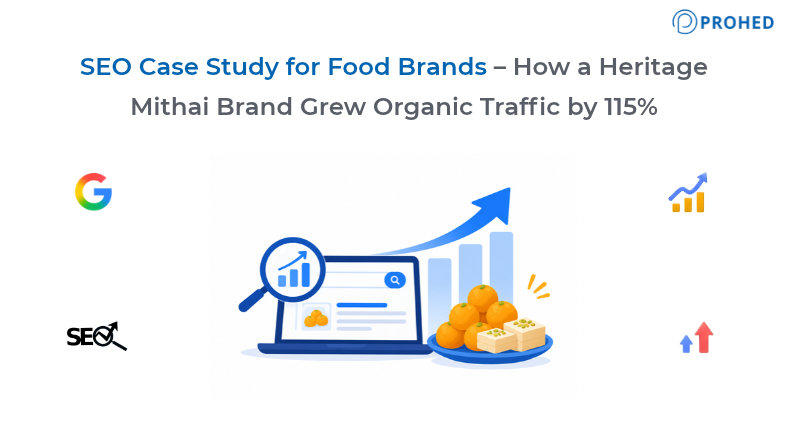
SEO for food brands works when pages rank before the buying season starts. This SEO case study from PROHED’s work with a luxury Indian sweets brand shows how seasonal keywords and clean site structure lifted organic traffic 115%.
Few food categories follow the calendar as closely as Indian sweets. Demand gathers around Diwali, Raksha Bandhan and the wedding months, and buyers start searching weeks before they order. A brand that begins optimising once the festival is underway has already missed most of it.
This post pulls five lessons out of one of our food SEO projects and adds the tactics that apply to any D2C food brand.
Key takeaways
- Food SEO is a timing game: festive pages must be live and indexed before the spike.
- Category pages built around gifts and occasions carry more ranking potential than single products.
- Fix site structure and technical health before adding more content.
- Recipes and stories should support the products, not compete with them.
Why SEO for Food Brands Works Differently?
SEO food brands invest in follows the same fundamentals as any ecommerce SEO, with three twists.
- Seasonal keywords carry the revenue. A large share of annual demand can sit inside a few festive and wedding windows, so the content calendar has to run ahead of the season.
- Local intent is strong. Queries such as “wedding sweets Delhi” combine a product with a city, which rewards location-relevant pages and accurate business listings.
- Gifting changes the query. Buyers search by occasion and recipient (“corporate Diwali gift hampers”) as often as by product name.
The SEO Case Study at a Glance
The brand is a luxury Indian sweets label selling traditional and contemporary mithai online, with a strong gifting focus. PROHED has handled its SEO alongside performance marketing since 2021. This project ran for under six months and aimed at stronger visibility for high-value searches such as luxury sweets and wedding mithai.
| Metric | Result |
|---|---|
| Organic traffic | +115% |
| Lead generation | +45% |
| Keywords on page one | 10+ |
| Target keywords with ranking gains | 60% |
Four commercial terms reached positions four and five, two of them high-competition:
| Keyword | Competition | Position |
|---|---|---|
| Luxury sweets online | High | 4 |
| Luxury sweets | High | 5 |
| Wedding mithai delivery | Medium | 5 |
| Wedding sweets Delhi | Medium | 5 |
The work ran across four areas: seasonal keyword targeting, site structure and technical fixes, on-page optimisation and high-quality link building. Curious which brand this is? The reveal comes after the five lessons.
5 Food SEO Lessons From the Project
Lessons 1 to 3 reflect what we did for the brand. Lessons 4 and 5 are our general advice for food brands, not claims about that project.
1. Rank Before the Festive Spike, Not During It
Searches for terms like “Diwali sweets box” or “wedding mithai delivery” build weeks before the occasion. Pages need to be indexed and ranking before that spike. The project began with seasonal keyword opportunities for this reason.
Check last year’s Google Search Console data to see when impressions started climbing, then work backwards. And refresh the same URL every season. A brand-new page each Diwali throws away the authority the old one built.
2. Fix Site Structure and Technical Health First
Content can’t rescue a messy site. For this brand, navigation, site structure, SEO-friendly URLs and technical health were improved alongside the keyword work. Crawlers and shoppers both need to reach the gift boxes in a click or two. If your festive category sits several levels deep behind a filter, start there. Our technical SEO checklist makes a good first audit.
3. Build Category Pages Around Gifts and Occasions
Category pages usually carry more ranking potential than single products, because they match broad commercial searches such as “luxury sweets online” or “wedding mithai delivery”. Build them around how people shop: Diwali gift boxes, sugar-free mithai, corporate hampers.
For queries that include a city, such as “wedding sweets Delhi”, location-relevant pages and accurate listings help. Our guide to hyperlocal SEO in India covers the detail.
4. Make Product Pages Do Real Work
Each product needs an original description, ingredient and shelf-life details, delivery coverage, and Product, Offer and AggregateRating schema so prices and ratings can appear in search results. Pages that repeat a supplier’s copy rarely rank and rarely convert.
5. Use Recipes and Stories to Support the Sale
Recipe content and the history behind a sweet can earn informational traffic and links. But every piece should link to the relevant category page instead of competing with it. This works best as part of a plan, not one-off posts. Our guides on SEO content strategy and topical authority in SEO explain how.
Food SEO Mistakes to Avoid
- Starting festive pages late. Once the season is on, you’re competing with every brand that started earlier.
- Creating a new page every season. It resets the history your best page has built.
- Letting blog posts outrank your own category pages. Informational content should send readers toward the products.
- Skipping product pages. Thin pages can hold back an otherwise good category.
The Brand Behind the Results: Khoya Mithai
The brand is Khoya Mithai, a luxury Indian sweets label that has worked with PROHED on SEO and performance marketing since 2021. If you want the full scope, approach and results from this project, read the Khoya Mithai case study.
How PROHED Approaches SEO for Food Brands?
Our SEO services for food and D2C brands start with a seasonal demand map: when searches for each occasion begin to rise, and which pages must be live before then. From there we run technical audits, page optimisation and link building, and we share organic data with performance marketing so paid budgets go to queries SEO can’t win yet. Festive paid demand peaks at the same time, which our piece on a flexible Diwali budget covers.
More on how we run ecommerce SEO is in our post on ecommerce SEO agency strategies. If you’re comparing agencies for a food or beverage project, ask for results with timeframes and named clients.
Conclusion
Food SEO doesn’t need years to start paying off, but it does need to start early. Seasonal keywords targeted ahead of the peak, a clean structure, optimised category pages and steady link building took Khoya Mithai’s organic traffic up 115% in under six months and lifted leads by 45%. Thefull case studyhas the details. For your own brand, begin with the calendar.
FAQs
1. How does SEO work for a D2C food brand?
It makes category, product and content pages rank for the searches buyers use, especially occasion and gifting queries. The brand then earns orders from Google without paying for each click.
2. How do food brands handle seasonal keyword demand?
They publish and optimise festive pages several weeks before each peak and use last year’s Search Console data to time it. The same pages are refreshed every season instead of replaced.
3. What content works for food ecommerce SEO?
Well-built category pages, detailed product pages with schema and gifting guides do most of the work. Recipe or heritage content helps when it links back to the products it supports.
4. How long does it take to see organic growth?
It varies with competition and site health. In the case study above, organic traffic grew 115% in under six months, though most brands should plan for steady gains over six to twelve months.
5. Can SEO reduce reliance on marketplaces?
Yes. Ranking your own pages for commercial searches brings buyers straight to your website, where margins are higher and customer data stays with you.
6. Which schema helps food ecommerce sites?
Product, Offer and AggregateRating schema help prices, availability and ratings appear in search results. FAQ markup can also support common buyer questions.
7. Does local SEO matter for an online mithai brand?
Yes, when buyers search with a city name or “near me”. Accurate business listings and city-relevant pages help you appear for those searches.
Want your food brand to rank before the next festive peak? Talk to PROHED about an SEO audit for your D2C food brand.
Schedule a Free Strategy Call with PROHED Today